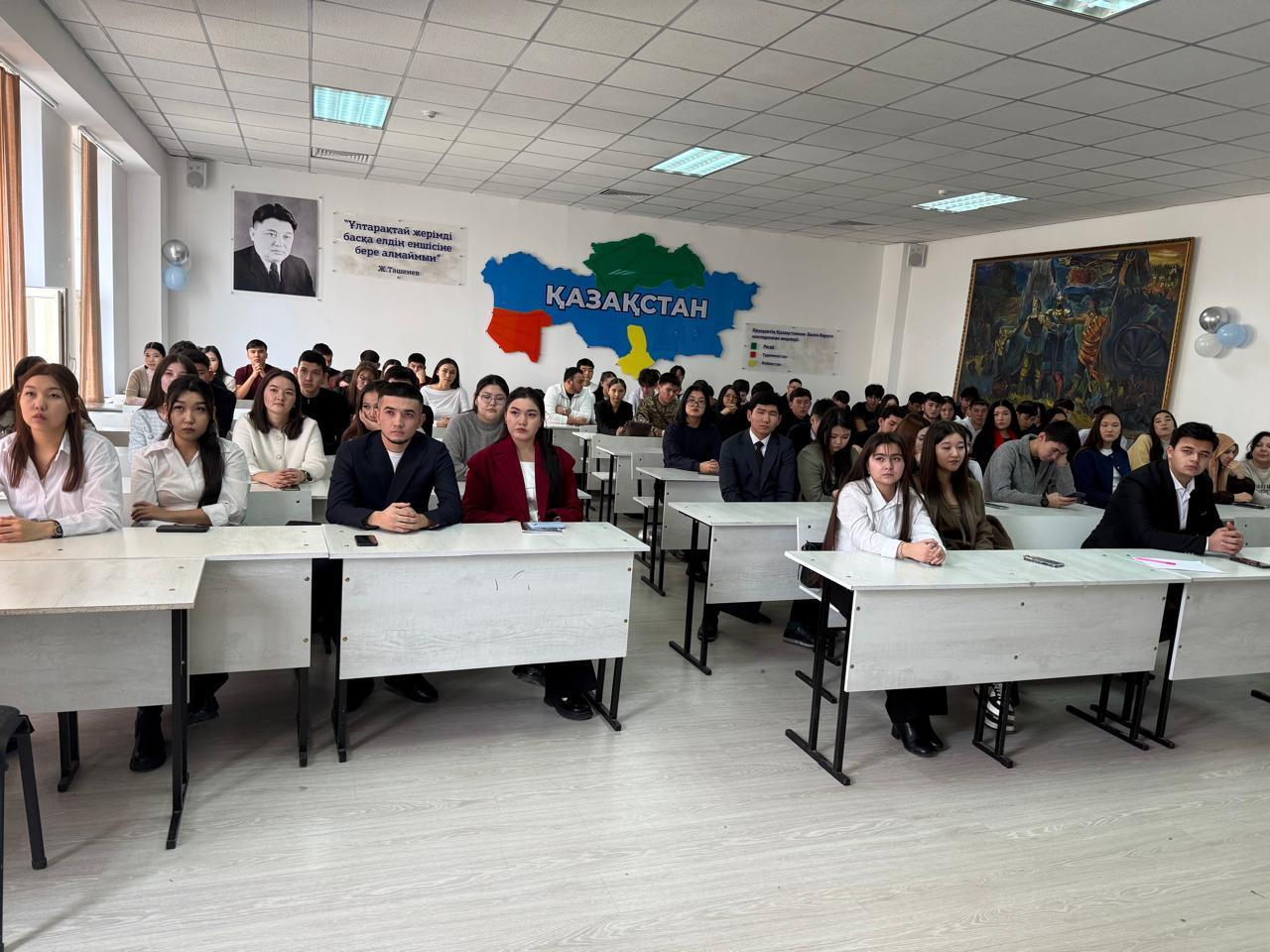
Curatorial hours were held in the groups of the Faculty of Economics and Law, dedicated to explaining the proposed amendments (in fact — the draft of a new edition) to the Constitution of the Republic of Kazakhstan.
2026-01-03
Curatorial hours were held in the groups of the Faculty of Economics and Law, dedicated to explaining the proposed amendments (in fact — the draft of a new edition) to the Constitution of the Republic of Kazakhstan.
This is related to the current stage of the 2026 constitutional reform: On January 31, 2026, the Constitutional Commission published a draft of the new Constitution, which significantly revises the current text (changes affect 77 out of 101 articles, or about 84% of the text). Initially, the discussion was about amendments to approximately 40 articles (in connection with the transition to a unicameral parliament — the Kurultai), but in the end, the commission prepared a full draft of a new Constitution.
Main goals and emphases of the reform (according to official sources):
• Strengthening the human-centered nature of the state (focus on human rights, social protection, and the values of the people).
• Updating the preamble and reflecting the principles of the “Just Kazakhstan”, national unity, and unitariness.
• Transition to a unicameral parliament (Kurultai instead of the Mazhilis and Senate).
• Introduction of the institution of Vice-President (appointed by the President with the consent of the Kurultai).
• Establishing the status of the People’s Council as a consultative body with the right of legislative initiative.
• Strengthening the protection of human rights (presumption of innocence, the right not to testify against oneself, etc.).
• Confirmation of the secular nature of the state and education.
• Defining the family as a union of a man and a woman.
• Other changes: redistribution of powers, new sections in the structure (11 sections instead of 9, 104 articles instead of 101; note: some sources indicate 95 articles in the draft).
The draft was developed based on more than 2,000 initiatives from citizens, parties, experts, and discussions. Final adoption is planned through a republican referendum (likely in 2027 or earlier; the exact date has not yet been set).
Why curatorial hours are being held right now
Curators (teachers, deputy deans) explain:
• the essence of the proposed changes,
• their impact on the state structure, citizens’ rights, economy, and society,
• the importance of public discussion of the draft.
This is part of a broad explanatory campaign across the country (in maslikhats, public councils, at the Kurultai, in the media, and in universities) so that students and young people understand the essence of the reform and can participate in the discussion.