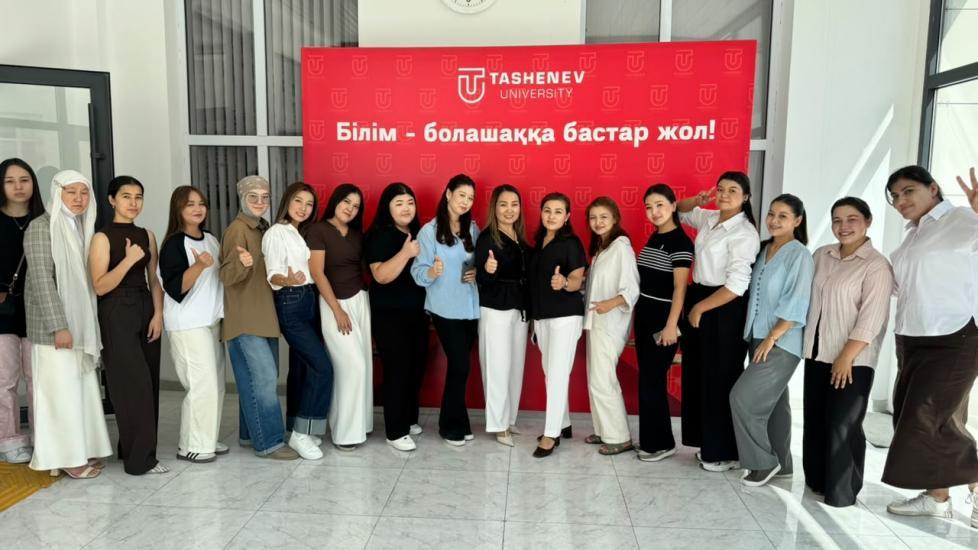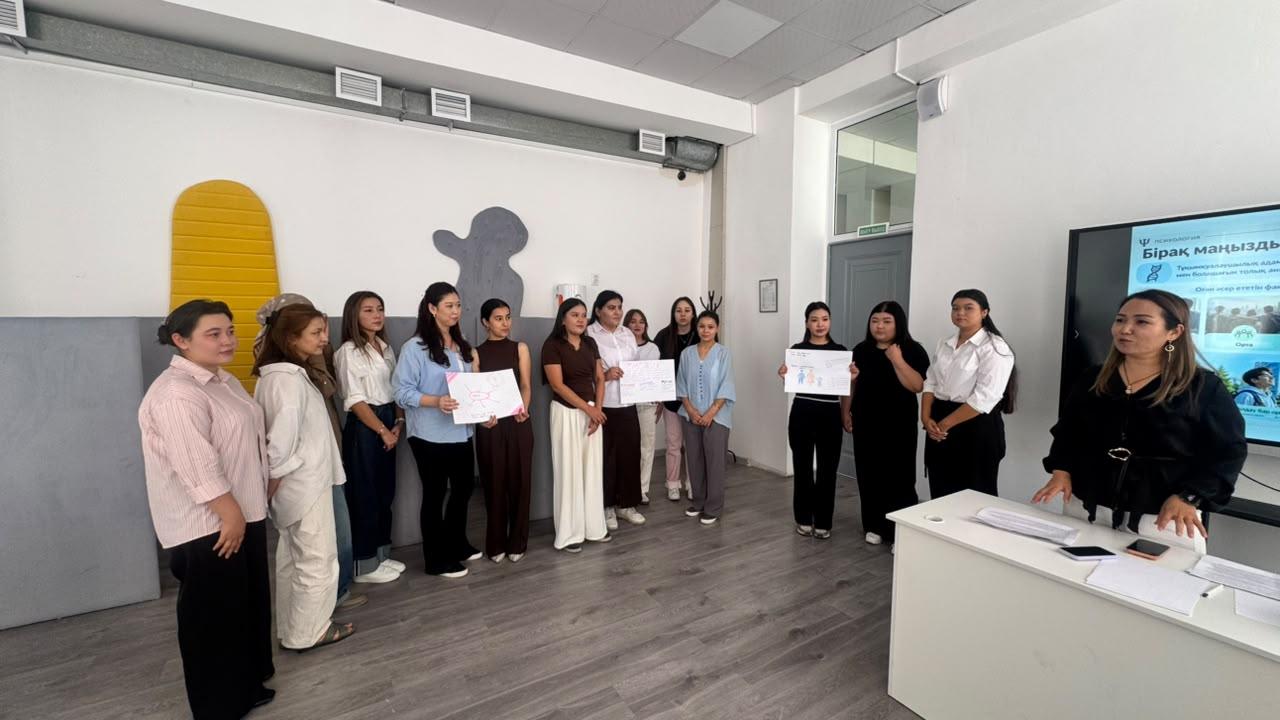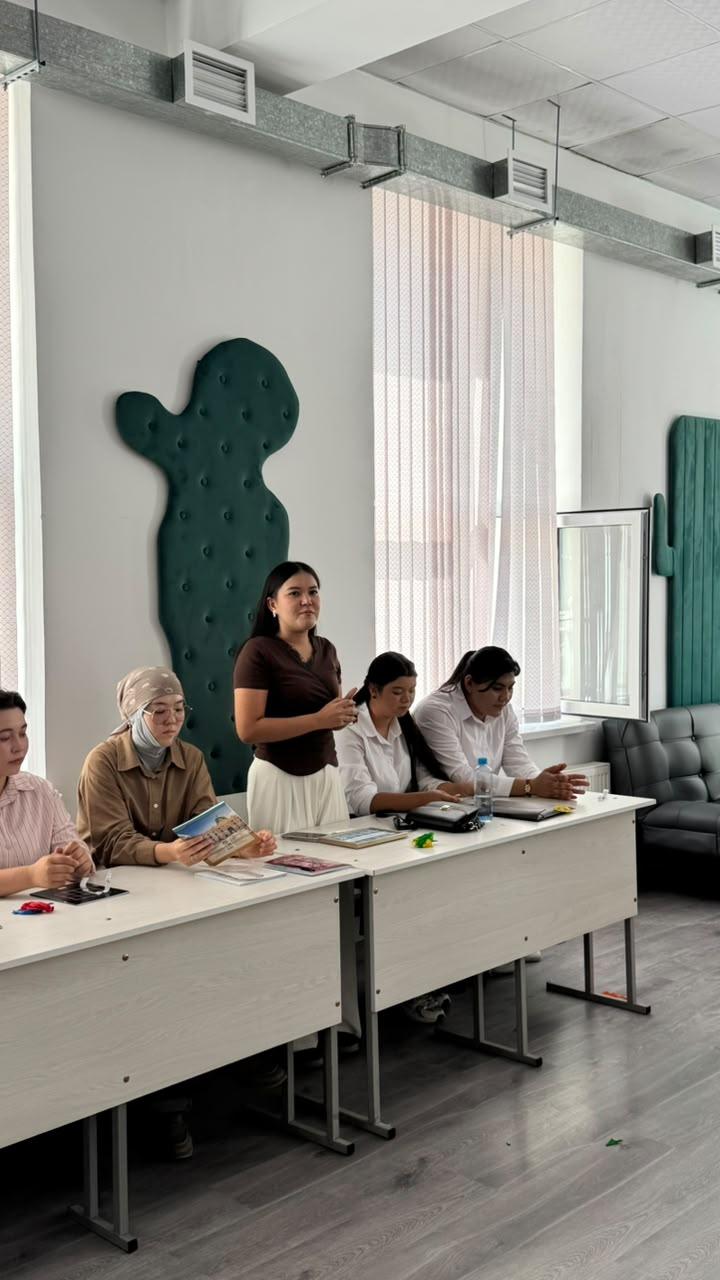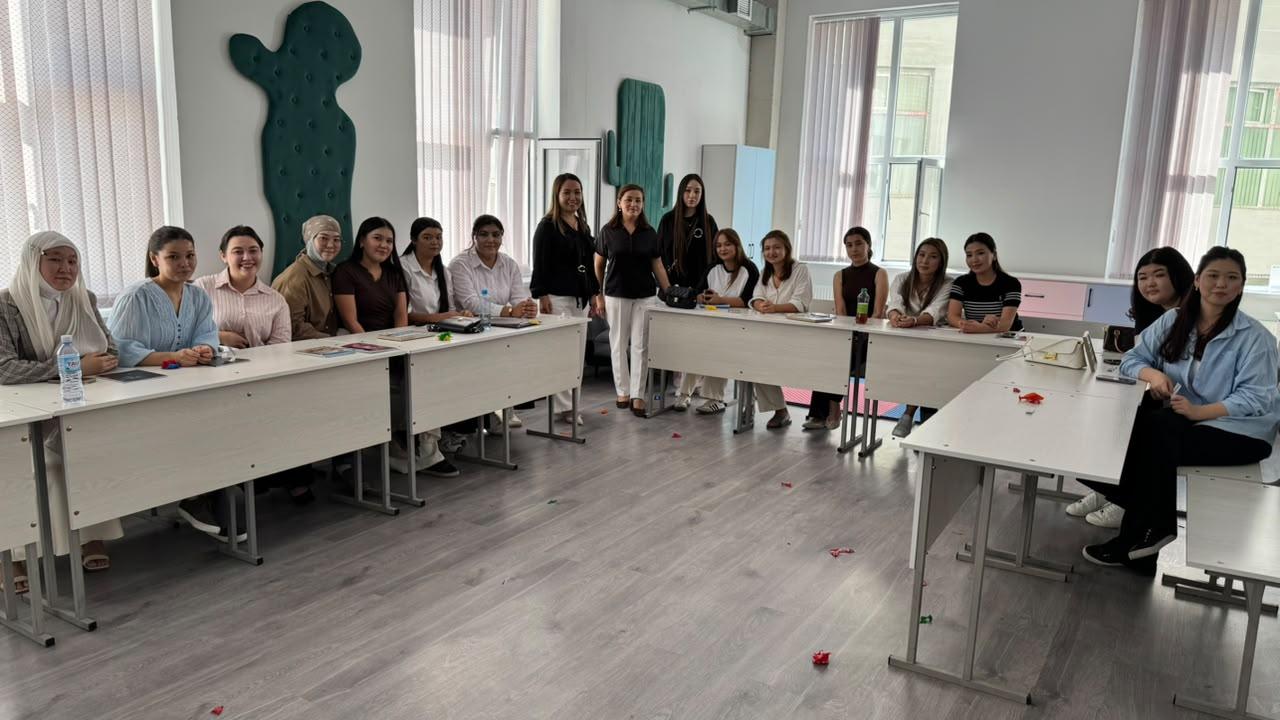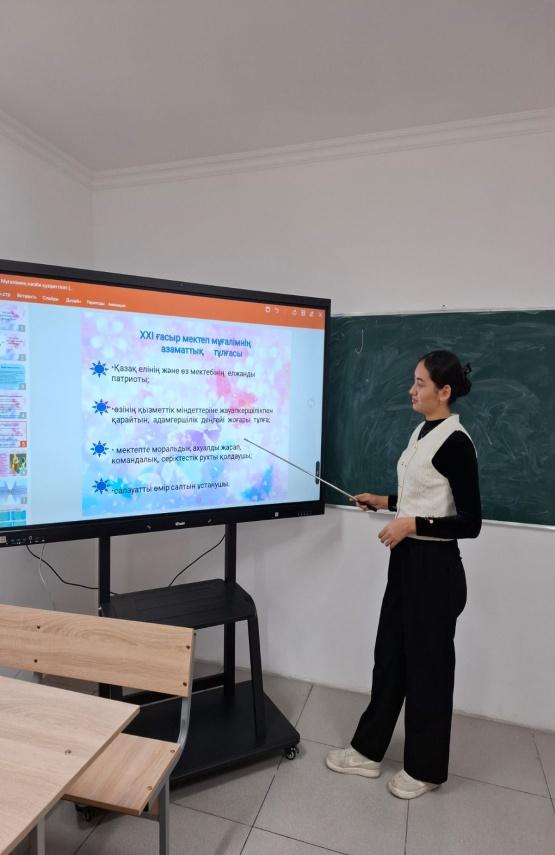
AN OPEN CLASS ON THE FACTORS INFLUENCING PERSONALITY DEVELOPMENT WAS HELD AT ZH.A. TASHENEV UNIVERSITY
2026-09-30
Institute of Pedagogical Sciences
Department of Pedagogy and Psychology
On 30 September 2026, an open lecture on Inclusive Education was held at the Institute of Pedagogical Sciences for groups 1103-25-7k1, 2 and 3 of the 6B01103 Psychology (IP) educational programme.
Lesson topic: “Personality Development: Environment, Upbringing, or Heredity?”
Type of lesson: lecture, interactive training lesson / practical skills session. A practical skills session is an interactive, applied learning format intended to help teachers, students, or other participants acquire specific practical experience in a particular field.
Methods: group work, case analysis, and reflection.
Visual aids: slides, presentation, model, and interactive whiteboard.
Venue: Room 101B.
Topic: Personality Development: Environment, Upbringing, or Heredity?
Type: interactive training lesson / practical skills session. A practical skills session is an interactive, applied learning format intended to help lecturers, students, or participants acquire specific practical experience in a particular field.
Format: group work, case analysis, and reflection.
Duration: 50 minutes.
Purpose of the lesson
To determine which factors have the greatest influence on personality development: genes, environment, or upbringing. The short answer is that all of them matter. Genes provide the “tools,” while environment and upbringing teach a person how to use them. “Genes provide the gun, the environment loads it, while upbringing and personal choice determine where to aim.”
Expected outcomes
The participant:
explains the concept of personality;
applies elements of pedagogical mastery in practice;
assesses their professional level;
prepares an initial personal development programme.
Methods used
Quick-fire questions
Bloom’s taxonomy
Case study
SWOT analysis
Video analysis
One Step Forward reflection method
Required materials
Projector or interactive whiteboard
Flipchart and markers
Sticky notes and A4 paper
Video or short motivational clip
Course of the lesson
I. ORGANISATIONAL STAGE (3 MINUTES)
Professional Image exercise
Answers are written on a flipchart for comparison at the end of the lesson.
Outcome: participants visualise their professional role.
Lecturer’s introductory remarks
To gain a deeper understanding of the academic debate on personality development, we will examine the arguments of three major approaches in the history of science—biogeneticism, sociogeneticism, and pedagogical or educational centrism—together with specific research supporting them. This material enriches the student lecture with scientific evidence.
1. What did biogenetic theorists argue? Supporters of heredity
Main idea: the fundamental characteristics of personality, level of intelligence, patterns of behaviour, and psychological disorders are innate. Environment and upbringing can only make minor adjustments to this pre-existing foundation and cannot fundamentally transform it.
Research and evidence
Minnesota Twin Family Study (1979–1990). Researchers led by psychologist Thomas Bouchard studied identical, or monozygotic, twins who had been adopted by different families shortly after birth and raised in entirely different environments.
Result: despite being raised apart, the twins showed similarities in intelligence (IQ), behavioural traits—including tendencies towards aggression, conservatism, or radicalism—and even laughter and preferences in 70 percent of cases. This demonstrated the substantial role of genes in the development of intelligence and temperament.
Criminological research on the MAOA gene. In 2002, a team led by Avshalom Caspi studied predispositions towards aggression and criminal behaviour. They found that people with low activity of the MAOA gene, sometimes called the “warrior gene,” cope less effectively with stress and may be more susceptible to criminal behaviour.
2. What did sociogenetic theorists argue? Supporters of environmental influence
Main idea: a person is a social product. Genes provide only a biological foundation, while consciousness, values, language, and behaviour are shaped by the surrounding social environment, including family, culture, and social circumstances.
Research and evidence
Studies of “feral children” and social isolation. More than one hundred cases have been recorded of children growing up outside human society, including among animals—for example, Genie, Amala, and Kamala. Psychologists and anthropologists found that, despite healthy genetic inheritance, these children had not developed characteristically human thinking, speech, or even upright walking. This is strong evidence that full personality development cannot occur without a social environment.
Albert Bandura’s Bobo doll experiment (1961). Stanford University psychologist Albert Bandura studied how children learn aggression. One group watched a video of adults striking an inflatable Bobo doll, while another group watched peaceful play.
Result: when left alone with the doll, children who had witnessed aggression hit it and behaved harshly, imitating the adults. The study showed that behaviour is shaped not only by genes but also by observing and imitating others through social learning.
3. What did supporters of upbringing argue? Pedagogical centrism
Main idea: the environment influences people spontaneously, whereas upbringing is a purposeful and systematically organised process. Education can help correct genetic predispositions and build “immunity” against harmful environmental influences.
Research and evidence
Lev Vygotsky’s theory of the zone of proximal development and developmental learning. Soviet psychologist L. Vygotsky argued that a child’s mind does not develop on its own but is formed through purposeful adult guidance in education and learning. What a child does today with an adult’s support can become an independent personal capacity tomorrow.
II. ENGAGING INTEREST (5 MINUTES)
Video viewing
“What Should a Teacher of the Twenty-First Century Be Like?”—any one-minute YouTube video.
Discussion questions
What did you notice?
What expectations are placed on teachers today?
Which of these qualities do you believe you possess?
III. MAIN SECTION (15 MINUTES)
Mini-lecture—Theory
A teacher’s professional competence includes:
1. Subject competence
In-depth command of the subject being taught and the ability to present it accurately from scientific and methodological perspectives.
2. Methodological and pedagogical competence
Lesson planning, selection of teaching methods, consideration of learners’ age characteristics, and outcome-oriented instruction.
3. Digital competence
Using ICT tools and online resources, developing digital learning materials, and maintaining cybersecurity. Digital competence is a teacher’s ability to use digital technologies effectively in teaching, assessment, communication, educational-resource management, and professional development.
4. Communicative competence
Effective communication with students, parents, and colleagues, emotional intelligence, and classroom management.
5. Personal competence
Creativity, professional ethics, self-development, values, and psychological resilience.
6. Social competence
Understanding the needs of the school, society, and parent community and working effectively in groups and teams.
2. Group work: Components of Pedagogical Mastery
Groups are asked to identify four components of pedagogical mastery.
Pedagogical technique is a set of speaking, communication, self-management, lesson-delivery, and student-interaction skills that enables a teacher to organise the educational process effectively.
Communicative mastery is a teacher’s ability to build effective relationships with students, parents, and colleagues; communicate information clearly; listen; manage emotions; and resolve pedagogical situations appropriately through language. In other words, it is the teacher’s culture of professional communication.
Organisational ability is the teacher’s capacity to plan, manage, coordinate, and organise the educational process and learning conditions effectively. It includes the systematic organisation of lessons, the classroom, time, students, and learning materials.
Personal style is the distinctive way a teacher works, expressed through behaviour, communication, teaching methods, emotional responses, and leadership approaches. It is the teacher’s individual professional signature and way of interacting with students.
The task concludes with a two-minute presentation review.
3. Case analysis (3–4 minutes)
Case: “A student frequently arrives late and shows no interest in lessons. What can the teacher do?”
Groups propose solutions, after which the lecturer summarises them using a coaching approach.
Guiding questions for group work
Groups may be asked to propose solutions in the following areas:
1. Pedagogical assessment
Why is the student late?
What causes the lack of interest?
Are there factors related to home circumstances, health, or psychological well-being?
2. Communication and motivation
Individual conversation with the student
Providing support
Setting a motivational goal
Identifying the student’s interests
3. Classroom approaches
Differentiation
Group or pair work
Active methods
Assigning the student a role, such as leader or moderator
4. Parent communication
Individual conversation
Understanding the home situation
Jointly identifying ways to provide support
5. Work with the class
Psychological climate
Positive discipline
Creating a supportive environment
Groups present their solutions
Each group provides three to five recommendations.
Lecturer’s conclusion using a coaching approach
The lecturer or coach does not give ready-made advice but encourages reflection through questions.
Coaching questions for the conclusion:
1. Questions that broaden awareness
“What might this student’s behaviour indicate?”
“What signal or prompt does the student’s lateness give you?”
2. Questions that encourage responsibility
“What could be changed in the lesson structure to make it more engaging for the student?”
“Which forms of support are appropriate to the student’s situation?”
3. Solution-focused questions
“What first step can you take?”
“What exactly is preventing this student from learning?”
4. Questions that identify resources
“What strengths does the student have?”
“What resources do you have?”
Concluding thought in a coaching style
“Every student’s behaviour is an unspoken request.
The teacher’s task is not to punish but to identify the cause.
Once the cause is understood, a solution becomes possible.”
4. Practical section: SWOT analysis
Participants write individually:
S—my strengths;
W—my weaknesses;
O—my development opportunities;
T—possible threats or barriers.
IV. CONCLUDING REFLECTION
One Step Forward method
Question: “One action I will begin taking today to improve my professional mastery is…”
Participants respond in one sentence.
V. ASSESSMENT
Types of assessment: peer assessment and self-assessment.
Final material—presentation prepared
For the final slide:
A competent teacher is the key person who ensures the quality of education.
Pedagogical mastery results from experience, reflection, and continuous development.
A modern teacher is creative, digitally literate, emotionally resilient, and a source of motivation.
Lecture analysis and conclusion
Dear students, guests, and lecturers, the central idea of today’s open lesson on “Teachers’ Professional Competence and Pedagogical Mastery” is that a modern teacher is not merely a subject specialist but also a well-rounded person committed to continuous development.
Professional competence is not limited to a teacher’s knowledge and skills. It also includes understanding students, revealing every child’s abilities, organising learning effectively, and mastering innovative technologies. Pedagogical mastery is the creative expression of this competence. A truly accomplished teacher is passionate about the profession, can reach a student’s heart, and makes every lesson engaging and meaningful.
In conclusion, I would like to emphasise that:
teacher professionalism guarantees high-quality education;
pedagogical mastery is the spiritual strength of every lesson;
continuous inquiry and innovation are essential companions of the modern teacher.
By learning from one another and exchanging experience, we can raise the quality of education to a new level. I believe today’s open lesson has given you useful insights, new ideas, and inspiration.